




Description
Comprehensive Guide to Industrial Project Electrical Wiring
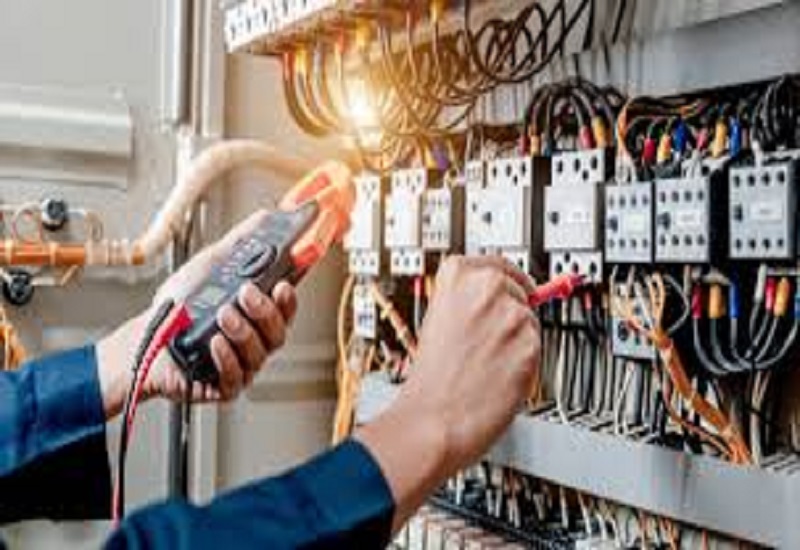
Industrial project electrical wiring involves the planning, installation, and maintenance of electrical systems for industrial facilities. It ensures the safe and efficient delivery of power to machinery, lighting, control systems, and other essential equipment. Below are the key details and aspects of industrial electrical wiring:
Design and Planning
Load Calculation
- Determine the total power demand of the facility, including machinery, lighting, HVAC systems, and auxiliary equipment.
- Account for peak load conditions and future expansion needs.
Power Distribution
- Design a clear and efficient power distribution system.
- Plan for subpanels, transformers, and main distribution boards to ensure smooth power flow.
Regulatory Compliance
- Adhere to local and international electrical codes, such as the National Electrical Code (NEC) or International Electrotechnical Commission (IEC) standards.
- Include safety measures and permits as required by local authorities.
Documentation
- Prepare detailed schematic diagrams, wiring layouts, and load schedules.
- Maintain clear documentation for future reference and troubleshooting.
Wiring Materials and Components
Wiring Materials
- Use industrial-grade cables such as THHN, XHHW, or armoured cables for durability.
- Select cable types based on current rating, voltage, and environmental conditions.
Conduits and Accessories
- Use metallic or non-metallic conduits to protect wiring from physical damage.
- Employ fittings, clamps, and cable glands for secure installations.
Protective Devices
- Install circuit breakers, fuses, and surge protectors to prevent overcurrent and short circuits.
- Use residual current devices (RCDs) or ground fault circuit interrupters (GFCIs) for enhanced safety.
Control Panels
- Assemble panels to house switches, relays, and circuit breakers.
- Include clear labelling and diagrams for operational ease.
Installation Process
Cable Routing
- Lay cables in conduits, cable trays, or ducts to protect them and maintain order.
- Ensure proper spacing and separation of power, control, and signal wiring to minimize interference.
Connections and Terminations
- Use crimping tools and terminal lugs for secure and reliable connections.
- Apply proper torque on terminal screws to avoid loose connections.
Grounding and Bonding
- Establish a robust grounding system to prevent electrical hazards.
- Bond metallic enclosures and conduits to the ground.
Marking and Labeling
- Mark cables, conduits, and panels with durable labels.
- Use colour codes and identification tags as per industry standards.
Comprehensive Technical Information Chart for Electrical Wires
| Parameter | Description | Common Values/Types |
|---|---|---|
| Wire Type | Defines the construction and application of the wire. | Solid, Stranded, Coaxial, Twisted Pair, Shielded |
| Material | The conductive core material. | Copper, Aluminum, Tinned Copper |
| Gauge (AWG) | Diameter of the wire, affecting current capacity and resistance. | 14 AWG (15A), 12 AWG (20A), 10 AWG (30A) (for standard household use) |
| Voltage Rating | Maximum voltage the wire can handle safely. | 300V, 600V (common ratings for residential and industrial wires) |
| Current Capacity | Maximum current (amperage) the wire can carry without overheating. | Depends on gauge, e.g., 14 AWG ≈ 15A; 12 AWG ≈ 20A |
| Insulation Material | Protects the conductor and determines environmental suitability. | PVC, XLPE, Teflon, Rubber |
| Temperature Rating | Maximum temperature the wire insulation can withstand. | 60°C, 75°C, 90°C, 125°C |
| Shielding | Reduces electromagnetic interference (EMI). | Braided Shield, Foil Shield, Unshielded |
| Color Code | Identifies the wire’s purpose (varies by region). | US: Black (hot), White (neutral), Green/Bare (ground); EU: Brown (live), Blue (neutral), Green/Yellow (ground) |
| Outer Diameter | Total diameter including insulation. | Typically measured in millimetres or inches. |
| Application | Where the wire is used. | Residential, Industrial, Automotive, Marine, Telecommunications |
Key Considerations
- Safety: Ensure adherence to lockout/tagout (LOTO) procedures and PPE usage.
- Load Balancing: Distribute power loads evenly across circuits.
- Environmental Factors: Account for temperature, humidity, and hazardous areas (explosion-proof wiring if needed).
- Future Expansion: Design wiring to accommodate future equipment additions.
Maintenance
- Routine Inspections: Check for wear, corrosion, and loose connections.
- Preventive Maintenance: Replace outdated components before failures occur.
- Troubleshooting: Quickly diagnose and repair issues to minimize downtime.
Best Practices for Reliable Industrial Project Electrical Wiring
Ensuring reliable electrical wiring in industrial projects requires following best practices focused on safety and long-term performance. Choosing the right wire type and material, such as copper for conductivity and tinned copper for corrosion resistance, is essential. Aluminium is cost-effective for larger installations but needs careful handling to avoid oxidation.
Proper insulation, like PVC or XLPE, protects against electrical hazards and environmental factors, while Teflon is ideal for high temperatures. Compliance with electrical codes and assessing load requirements help prevent overloading and ensure safety. Grounding and shielding minimize interference and faults.
Certified electricians should handle installation to ensure proper routing, cable securing, and system testing. Regular maintenance and inspections help detect issues early, supporting reliable operation. Adhering to these practices leads to safe, efficient, and dependable electrical systems in industrial projects.
Summarization of Industrial Project Electrical Wiring
Selecting the right wiring type, material, and insulation is crucial for the safety and efficiency of industrial projects. Adhering to safety standards and regulatory codes ensures compliance and minimizes risks. High-quality materials and professional installation lead to reliable, long-lasting performance, reducing future maintenance and downtime.


Reviews
There are no reviews yet.